The Invisible Risk of Unmanaged AI in Small Businesses
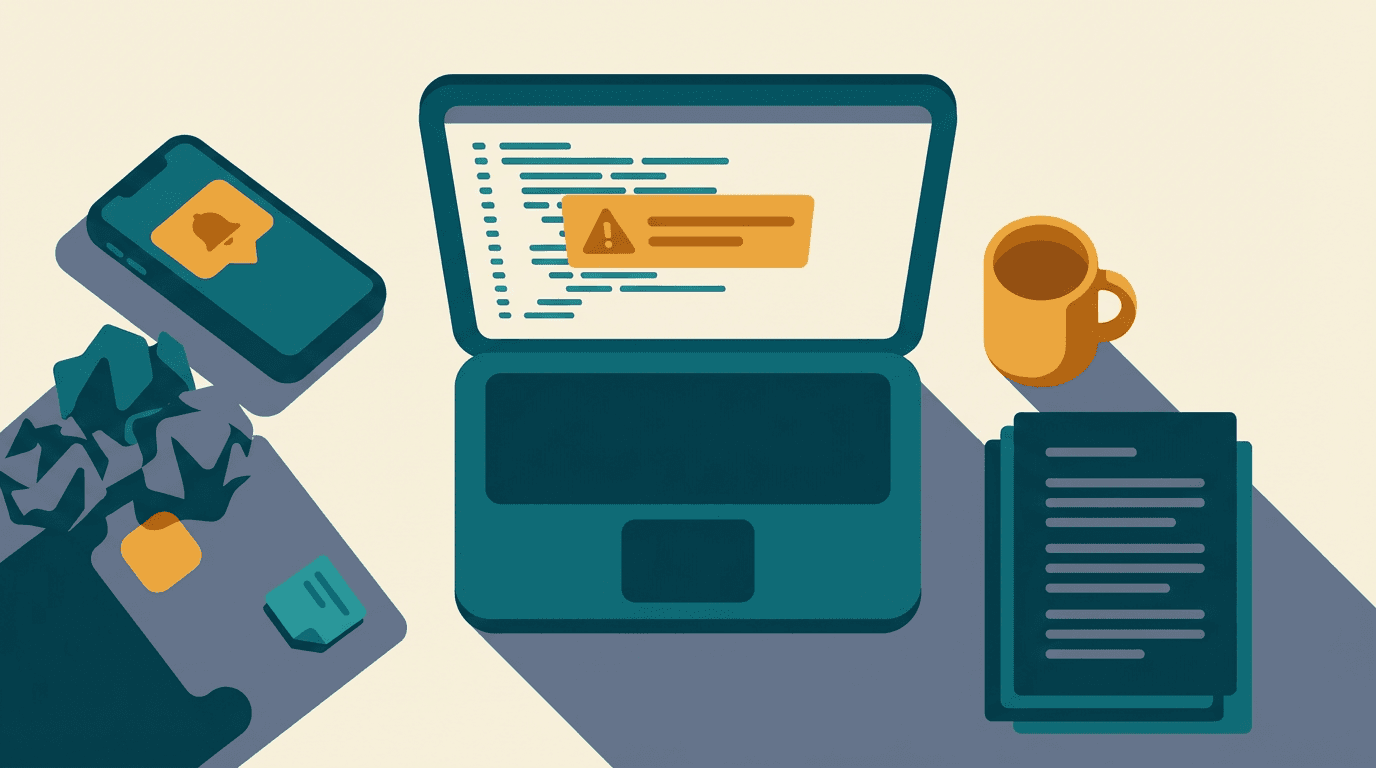
An accounts assistant is staring at a 40-page supplier contract. It's 4:30 PM. They don't want to read it. They open a personal browser tab, paste the entire PDF text into a free ChatGPT window, and ask for a summary.
The summary is excellent. The MD is happy. The assistant goes home on time.
But that assistant just handed the pricing tiers of your biggest supplier to a third-party server. Nobody knows it happened. You don't get a notification. You just slowly bleed proprietary data.
This is how unmanaged AI works in a small business. Your team is already using these tools to survive their workload. If you don't have a system to manage it, you're carrying a massive, invisible risk.
The free-tier compliance trap

The free-tier compliance trap is the compounding legal risk you acquire when your team pastes sensitive company data into consumer AI tools to save time.
It happens silently. You think your data is locked down in Microsoft 365. Meanwhile, your sales reps are feeding client emails into Gemini to draft replies, and your ops manager is running staff rotas through a free web parser.
Microsoft tracked this in late 2025: 71% of UK employees use unapproved AI tools at work. They aren't malicious. They're just busy. They want to clear their inbox. But the UK GDPR doesn't care about their intentions.
If an employee pastes a client list into a public language model, you're the data controller. You carry the liability. The Information Commissioner's Office doesn't distinguish between a 12-person agency and a 5,000-person bank when data leaves your borders.
This risk persists because SME owners treat AI as an IT problem. They think they can solve it by buying a firewall or ignoring it entirely. You can't. The tools are browser-based. They live on personal phones. The trap closes when you assume your team will just figure it out on their own.
You're accumulating a compliance debt every single day. Eventually, a client will ask how their data is processed, or an audit will flag a leak. By then, the data is already gone.
Why the obvious fix fails
The standard response to this risk is a blanket ban. You block the ChatGPT domain on the office Wi-Fi. Or you download a generic acceptable use policy from a legal template site, email it to the team, and demand a signature.
This fails completely.
Banning domains is useless when staff have 5G on their phones. They'll just switch to Claude, or use a tool you forgot to block.
Generic policies fail because they rely on vague corporate language. A template will say "do not process proprietary information". A junior analyst doesn't know if a supplier invoice from Xero counts as proprietary.
They just know Zapier is annoying. Zapier's Find steps can't nest, so when your Xero supplier has a custom contact field two levels deep, the automation silently writes null and you only notice at month-end. ChatGPT parses the line items perfectly.
So they ignore the policy. The document becomes a useless piece of paper that protects nobody. It sits in a SharePoint folder while your team continues to leak data.
Here's what actually happens when you try to ban these tools. The usage goes underground. You lose all visibility. You can't see what data is leaving the business. You can't train the team on safe usage because nobody admits to using the tools.
The pattern I keep seeing is denial. A founder tells me they don't use AI. Then we look at the network logs, and OpenAI is the third most visited domain. You can't legislate away convenience.
A £25 a month subscription can't replace a £35k salary, but it can automate the boring parts of that job. If a tool saves an accounts assistant three hours a week, they'll use it. End of.
The approach that actually works

You don't stop shadow AI with a PDF. You stop it by giving your team a sanctioned, internal tool that's easier to use than the public alternative. Then you write a policy that explicitly points them to it.
Here's a real workflow. Your accounts team receives hundreds of supplier invoices a month. Instead of letting them paste those PDFs into a public LLM, you build a closed loop.
You set up an n8n webhook to catch incoming emails. The webhook triggers a Claude API call. You use a strict JSON schema to force Claude to extract the invoice number, supplier name, and line items. The webhook parses the JSON, and then PATCHes the Xero invoice directly.
This isn't a massive enterprise IT project. It requires two to three weeks of build time and costs £6k to £12k depending on your existing integrations.
Once you build this, your AI policy becomes incredibly simple. You tell the team: "Use the internal n8n invoice parser for all supplier PDFs. Don't use public AI tools."
You give them a clear data classification. Public data is safe for anything. Internal data goes through approved internal tools only, like your Claude API setup. Restricted data never touches an AI tool.
You also need to plan for failure modes. What happens when the Claude API hits a rate limit? What happens when a supplier sends a wildly formatted invoice and the JSON schema breaks?
You catch these errors by routing failed parses to a dedicated Slack channel. A human reviews the failure, corrects it, and pushes it through. The policy acknowledges that the system will break and provides a safe path for the user when it does.
This approach works because it aligns compliance with convenience. You aren't just saying no. You're providing a faster, safer yes. You get the productivity gains, and you keep the data inside your own API environment.
Where this breaks down
This combination of internal tooling and tiered policy doesn't apply to every data type. You need to check your inputs before committing to an automated workflow.
If your invoices come in as scanned TIFFs from legacy accounting systems, you need an OCR step first. Once you add OCR to heavily degraded documents, the error rate jumps from 1% to around 12%. The AI will confidently hallucinate numbers based on bad text extraction.
You'll spend more time fixing the errors than you would have spent doing manual data entry.
It also breaks down with highly sensitive, unstructured text. If your HR team wants to summarise grievance letters or performance reviews, don't build an API loop for that. The risk of a prompt injection or a logging error exposing sensitive employee data is too high.
There's no acceptable margin of error when dealing with special category data under UK GDPR.
In these edge cases, the policy must revert to a hard stop. You draw a line. You state clearly that certain tasks require human reading, no exceptions. You protect the business by knowing exactly where the automation stops, and you ensure your staff understand why those boundaries exist.
Three mistakes to avoid
- DON'T buy cheap subscriptions and assume you're safe. A £25 a month ChatGPT Plus subscription doesn't give you enterprise data protection. The free and low-tier consumer plans often retain your prompts to train future models. If you want to keep your data private, you need an enterprise agreement or you need to use the API, which has different retention rules. Paying for a consumer tool doesn't magically solve your UK GDPR obligations. You're just paying to leak data slightly faster.
- DON'T write a policy without talking to your ops team first. If you write a policy in isolation, you'll ban workflows your business relies on. Sit down with your ops manager. Ask them exactly which tools the team is using right now. You need to know the reality on the ground before you try to govern it. A policy that ignores how the work actually gets done will be ignored by the people doing the work. They'll just hide their browser tabs when you walk past.
- DON'T wait for the government to tell you what to do. The legislation is always two years behind the technology. If you wait for a perfect, comprehensive law to dictate your AI strategy, your team will spend that entire period leaking data. The UK GDPR already applies to how you process personal data, regardless of the tool. You need to take a position now. Draft the policy, build the safe workflows, and update them as the landscape changes.
Get our UK AI insights.
Practical reads on AI for UK businesses — teardowns, how-to guides, regulatory news. Unsubscribe anytime.
Unsubscribe anytime.