Stop Paying the Prompt-Guru Premium: Why SMEs Must Hire for Domain Expertise
You're staring at a stack of CVs for a mid-level ops manager. Half the candidates have "prompt engineering" listed right under their university degree. A junior analyst with two years of experience wants £45,000 because he set up a Zapier flow that drafts emails in ChatGPT.
The skills gap is real, but the way SMEs are trying to bridge it is absurd. You're paying a premium for people who know how to talk to a chatbot, but have no idea how a supply chain actually works.
It's a massive misallocation of capital. The panic to hire AI talent is blinding founders to what actually makes a business function.
The prompt-guru premium
The prompt-guru premium is the inflated salary you pay a candidate who knows basic AI tools but lacks the core domain expertise to do the actual job. You hire a logistics coordinator who boasts about automating route planning with Claude.
Then a driver calls in sick, a pallet gets stuck at customs, and your new hire freezes because they don't understand the underlying freight mechanics. They know how to prompt the model, but they don't know what a realistic transit time looks like.
This happens because founders mistake a tool for a discipline. AI hiring has become a panic response across the SME sector. You see competitors talking about their tech stack, so you write job descriptions demanding AI proficiency for roles that never needed it before.
The data backs this up. The 2024 Work Trend Index from Microsoft and LinkedIn notes that 66% of leaders say they wouldn't hire someone without AI skills. That creates a false market.
Candidates pad their CVs with buzzwords, and SMEs pay a 20% markup for a skill that takes a weekend to learn. It's a fundamental mispricing of talent.
It's a mess. You end up with a team of amateur technologists who can't reconcile a ledger or negotiate a supplier contract. This premium drains your payroll while your core operations degrade.
You're buying the illusion of progress. You're rewarding candidates for knowing how to talk to a machine, rather than how to run your business.
Why off-the-shelf SaaS and AI generalists miss the mark
The obvious fix for the skills gap is to hire a junior enthusiast and give them a Zapier account, but this fails because basic automations lack domain context. You tell them to automate the back office. They start linking Gmail to Slack, parsing incoming supplier emails, and pushing the data into Airtable.
It looks like magic for the first three days. Then it breaks.
Here's what actually happens. Zapier's standard triggers are blind to context. When a supplier sends an invoice as a PDF, the Zap extracts the text. But Zapier's Find steps can't nest effectively.
If the supplier changes their template and puts the purchase order number on page two, the automation silently writes a null value into your Airtable base.
Your junior hire doesn't notice because they don't understand accounting. They don't know that a missing PO number means the invoice will fail the three-way match in Xero at month-end. They just see a green tick in Zapier and assume the job is done.
You don't need someone who knows how to prompt a language model. You need a bookkeeper who knows what a valid invoice looks like. A £25 monthly ChatGPT subscription can't replace a £35,000 salary.
A junior who knows how to write a prompt can't replace a veteran who knows your business logic. End of.
The pattern I keep seeing is always the same. AI tools lack domain context. If the person operating the tool also lacks domain context, errors compound silently. You only find out when a supplier threatens to withhold goods because they haven't been paid.
Hire for the domain, abstract the AI

The only approach that actually works is to hire for domain expertise and build the AI directly into their existing workflow. Pay your veteran bookkeeper for their deep understanding of your supply chain and your Xero chart of accounts. Then, build the automation so they never have to write a prompt.
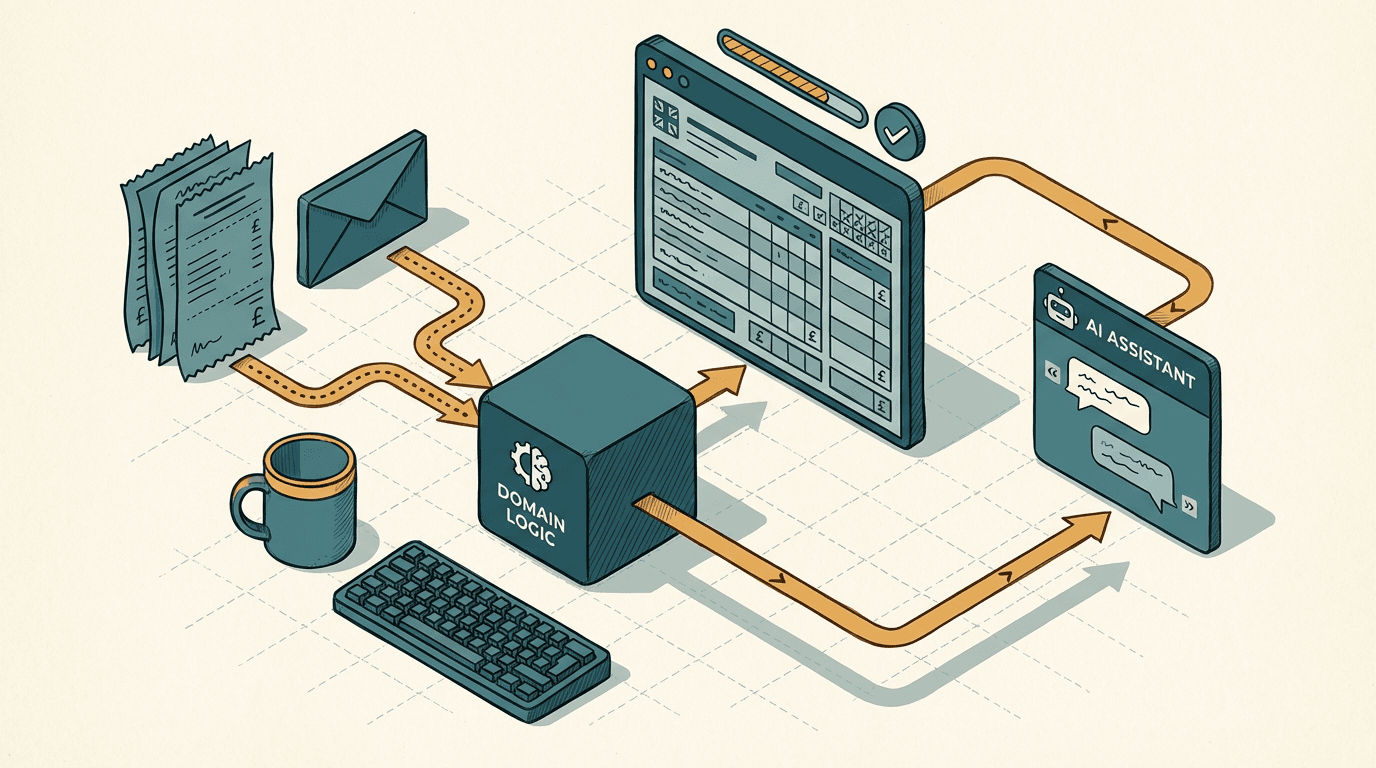
You want your accounts assistant reviewing data, not wrestling with ChatGPT. When a PDF invoice arrives from your primary packaging supplier, it lands in a dedicated Gmail inbox. That's your trigger.
An n8n webhook catches the email and strips the PDF attachment. It sends that file directly to the Claude API with a strict JSON schema.
The system prompt doesn't ask Claude to read the invoice. It demands a specific JSON object containing the invoice date, total amount, line items, and the crucial PO number.
The n8n workflow then takes that structured JSON and PATCHes the Xero invoice line items directly via the Xero API. Your bookkeeper logs into Xero, sees a draft bill, checks the physical PDF attached to the record, and clicks approve.
They don't need to be an AI expert. They just need to be a good bookkeeper. The AI is an invisible engine doing the heavy lifting in the background.
Building this specific ingestion pipeline takes about two to three weeks of build time. I usually quote £6,000 to £12,000 depending on how messy your existing supplier data is.
That sounds like a large upfront cost. But compare it to paying an extra £15,000 every single year for an ops manager who claims to be an AI expert.
The known failure mode here is hallucination on edge cases. If a supplier sends a credit note instead of an invoice, Claude might try to force those negative numbers into your standard invoice schema.
You catch this by adding a routing step in n8n. Ask a fast, cheap model to classify the document type first. If it's a credit note, route it to a human review queue in Slack.
Pay attention to this part. You're building guardrails around the AI, relying on your domain experts to handle the exceptions. That's how you scale a team.
The limits of invisible AI
Invisible AI pipelines break down entirely when your inputs are analogue, handwritten, or severely degraded. This approach assumes your data is somewhat structured and digital. If your invoices come in as scanned TIFFs from legacy accounting systems, or handwritten delivery dockets from independent drivers, you can't just throw them at an API. You need a dedicated OCR layer first.
Once you do that on bad handwriting, the error rate jumps from 1% to around 12%. At a 12% error rate, the system creates more work than it saves.
Your accounts assistant will spend more time correcting bad Xero drafts than they would've spent typing them out manually. And yes, that's annoying.
I see founders ignore this physical reality all the time. They want the shiny automation, but they refuse to acknowledge that their warehouse still runs on carbon-copy paper slips.
Before committing to a build, audit your inputs. Look at the last 100 documents you received. If more than ten of them require a human to squint and guess a number, don't build an automated pipeline.
Fix your supplier compliance first. Force them into a standard PDF format. AI can't fix broken operational discipline.
The panic to acquire AI talent is a distraction. You don't need a prompt engineer to run your supply chain, and you don't need an AI enthusiast to reconcile your ledgers. You need sharp, experienced operators who understand the mechanics of your business. The technology is just a tool to make those operators faster. Stop paying the prompt-guru premium for candidates who know the buzzwords but can't execute the core job. Build systems that abstract the complexity away, let the machines handle the data entry, and let your humans handle the judgement. The question isn't whether AI replaces your ops manager. It's whether you know which £32,000 of her week is actually reconciling Xero against Stripe, because that is the only part a bot can touch this year.
Get our UK AI insights.
Practical reads on AI for UK businesses — teardowns, how-to guides, regulatory news. Unsubscribe anytime.
Unsubscribe anytime.