Eliminating the £50k Bid-Desk Tax: How SMEs Can Automate Public Sector Tenders
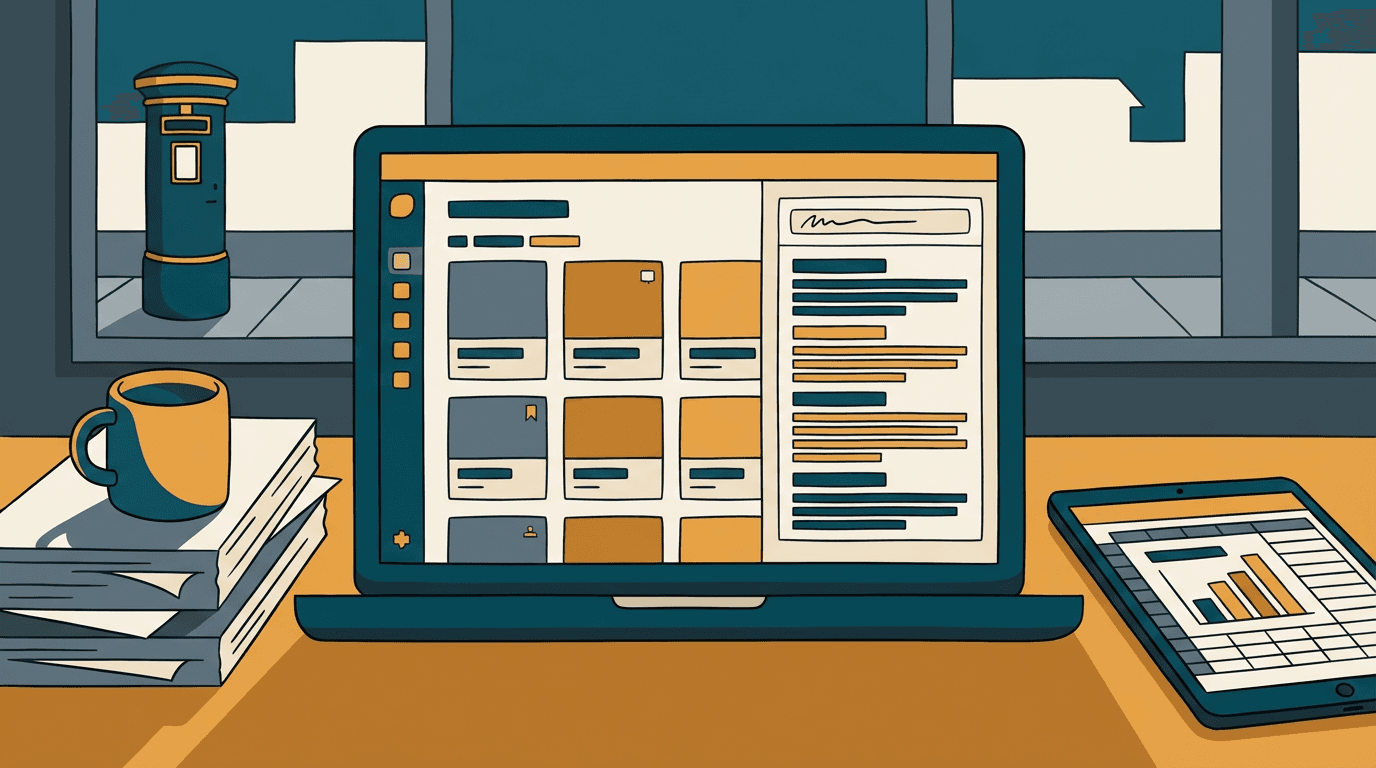
You are staring at a 140-page PDF from a local council. The deadline is in nine days. Your ops manager is already at capacity, and your sales rep is busy closing actual deals. So you, the founder, will spend your weekend building a compliance matrix in Excel.
The government recently announced a push to direct 30% of their #341 billion procurement spend to SMEs by 2028 [source](https://committees.parliament.uk/work/8345/small-business-strategy/). That is a massive pool of capital. But accessing that money requires playing a rigid game of compliance.
You have to answer fifty questions exactly as asked, mapping every sentence back to an evaluation weighting hidden in an annex. If you don't have a dedicated bid team, you are effectively locked out.
The #50k bid-desk tax
The #50k bid-desk tax is the invisible cost of hiring dedicated staff just to read, parse, and format public sector tender documents so you don't get disqualified on a technicality.
Public procurement is not about who has the best service. It is an exercise in risk mitigation for the buyer. They publish a 200-page Invitation to Tender (ITT), and they expect you to find the mandatory insurance thresholds buried on page 147.
Most SMEs cannot justify paying a full-time bid manager #50,000 a year to sit and read PDFs. So the work falls on the leadership team. You read the documents. You highlight the penalty clauses. You manually list the mandatory requirements.
It's a mess. Nobody knows why the documents are formatted so poorly. End of.
Because the manual effort is so high, SMEs only bid on a fraction of the contracts they could actually win. You look at the portal, see a 50-page specification, and decide it isn't worth the weekend work.
The government's 30% SME target is meaningless if the friction to apply remains this high. The gap between the contracts you can deliver and the contracts you have the energy to bid for is entirely driven by this tax. You are bleeding opportunity cost because parsing documents manually doesn't scale.
Why the generic chatbot fails
The generic chatbot approach fails because general large language models prioritise narrative fluency over strict legal compliance, causing them to hallucinate or skip mandatory evaluation criteria.
The immediate reflex is to buy a #25/month ChatGPT Plus subscription, drop the PDF into the chat window, and ask it to write the proposal.
Not this. Anything but this.
When you feed a 100-page public sector tender into a standard LLM, it loses the plot. It hallucinates evaluation weightings. It skips the hidden liability caps. It smooths over rigid legal constraints to output a nice-sounding, confident narrative.
Here is the exact mechanism of why it breaks. General LLMs use attention mechanisms that prioritise the beginning and end of long prompts. If a mandatory certification requirement is buried in the middle of a dense annex, the model silently drops it.
You submit the bid. You get disqualified in the first round for non-compliance.
I see this constantly. In my experience, throwing a massive PDF into a generic chatbot leads to immediate failure. The AI doesn't cross-reference your response against the exact clause. It just writes.
And yes, that's annoying. You end up spending more time fact-checking the AI's output than you would have spent writing it from scratch.
You cannot pipe Zapier into OpenAI and expect it to win government contracts. Zapier's basic text extraction ruins the document structure. Tables become unreadable text blobs.
When your evaluation criteria are inside a complex table, the automation silently writes null, and you only notice when the portal rejects your submission.
Many SMEs try to automate the triage phase by routing emails from procurement portals through Make or Zapier. They set up a flow that triggers when a new tender alert lands in Outlook.
The webhook strips the PDF attachment, sends it to the OpenAI API, and tries to dump a summary into Slack. It sounds brilliant on paper. In practice, it dies on contact with reality.
The API times out on large files. The token limits truncate the document. The output you get in Slack is a generic summary that misses the single most important detail: the unbillable cost clause hidden in the fine print.
The forensic extraction approach

The forensic extraction approach is a method that physically separates the extraction of tender constraints from the drafting of the proposal, using strict JSON schemas to prevent hallucination.
To win these bids, you have to separate extraction from drafting. You don't ask the AI to write a bid. You build a system that audits the tender, extracts the constraints, and then generates responses mapped strictly to those constraints.
This is how you eliminate the #50k bid-desk tax. Here is what actually happens when you do this right.
You download a 150-page ITT for a regional IT support contract. Instead of reading it, you run it through a purpose-built forensic engine like Lucius AI, which is designed specifically for SME bid writing [source](https://lucius.ai/sme-bid-writing). Or, if you want to own the infrastructure, you build a custom pipeline.
Let's look at the custom build. You drop the PDF into a designated Google Drive folder. This triggers an n8n workflow. The n8n webhook fires the document to a document parser that maintains table structures.
Then, n8n makes an API call to Claude 3.5 Sonnet. Crucially, you use a strict JSON schema. You don't ask for a summary. You demand an array of specific objects: penalty clauses, mandatory certifications, and evaluation weightings.
The webhook parses the JSON and writes it directly into Airtable. Now you have a compliance matrix. You review it. You decide to bid.
The next step is drafting. The n8n workflow pulls your past winning bids from Supabase. It takes the specific evaluation criteria from Airtable and feeds both into a new Claude API call.
The prompt forces the model to cite the exact document clause for every claim it makes. If the tender asks for your data security protocol, the AI writes the response and appends [Part A §4].
Building this custom n8n, Supabase, and Claude pipeline takes 2-3 weeks of build time. Expect to spend #6k-#12k depending on how clean your existing collateral is. Alternatively, off-the-shelf tools like Lucius AI handle the forensic extraction for around #49 a scan.
The main failure mode here is poor context injection. If your Supabase vector database pulls a case study from a #10k private sector project to answer a #500k public sector prompt, the response will look naive.
You catch this by forcing the AI to output a confidence score for its material. If the score is below 80%, the system flags it in Slack for human review.
Where this breaks down
This system breaks down when buyers upload scanned TIFF files instead of machine-readable PDFs, or when your company lacks a library of past written collateral for the AI to mimic.
This architecture is powerful, but it isn't magic. There are specific environments where it falls flat, and you need to know them before you spend a pound on API credits.
If your target buyers are legacy local councils, their procurement portals are often archaic. Sometimes the tender documents come in as scanned TIFFs or poorly photocopied PDFs with handwritten amendments.
Standard text extraction fails completely here. You need to route the files through a dedicated OCR layer first, and even then, the error rate jumps from 1% to ~12%. You'll spend hours manually correcting the text before the AI can even read it.
Also, this system requires a foundation of truth. If your company has no past written collateral, the AI has nothing to mimic. No previous bids. No detailed methodology documents. No technical architecture diagrams.
It will write generic, hollow fluff. You can't automate a blank slate.
If you are a new SME entering the public sector for the first time, you have to write your first few bids manually. You need to build the library of answers. Only once you have that baseline can you start feeding it into Airtable and Supabase to submit more bids.
Three questions to sit with
The public sector is slowly opening up its wallet. The capital is there, but the barrier to entry remains pure operational friction. You can either hire an expensive team to read endless PDFs, or you can build a system that does the heavy lifting for you.
Before you decide on your next step, look closely at your current tendering process. Pay attention to this part.
- Are you losing public sector bids because your pricing is genuinely uncompetitive, or because your manual compliance mapping is sloppy and misses hidden evaluation criteria?
- Does your current AI setup actively cross-reference its generated answers against specific tender clauses, or does it just write confident-sounding paragraphs that fall apart under scrutiny?
- If the government actually hits its 30% SME procurement target, do you have the operational bandwidth to submit three times as many tenders this year without burning out your leadership team?
Get our UK AI insights.
Practical reads on AI for UK businesses — teardowns, how-to guides, regulatory news. Unsubscribe anytime.
Unsubscribe anytime.