FSB Report Finds Small Firms Spend £5,200 Annually Chasing Late Payments
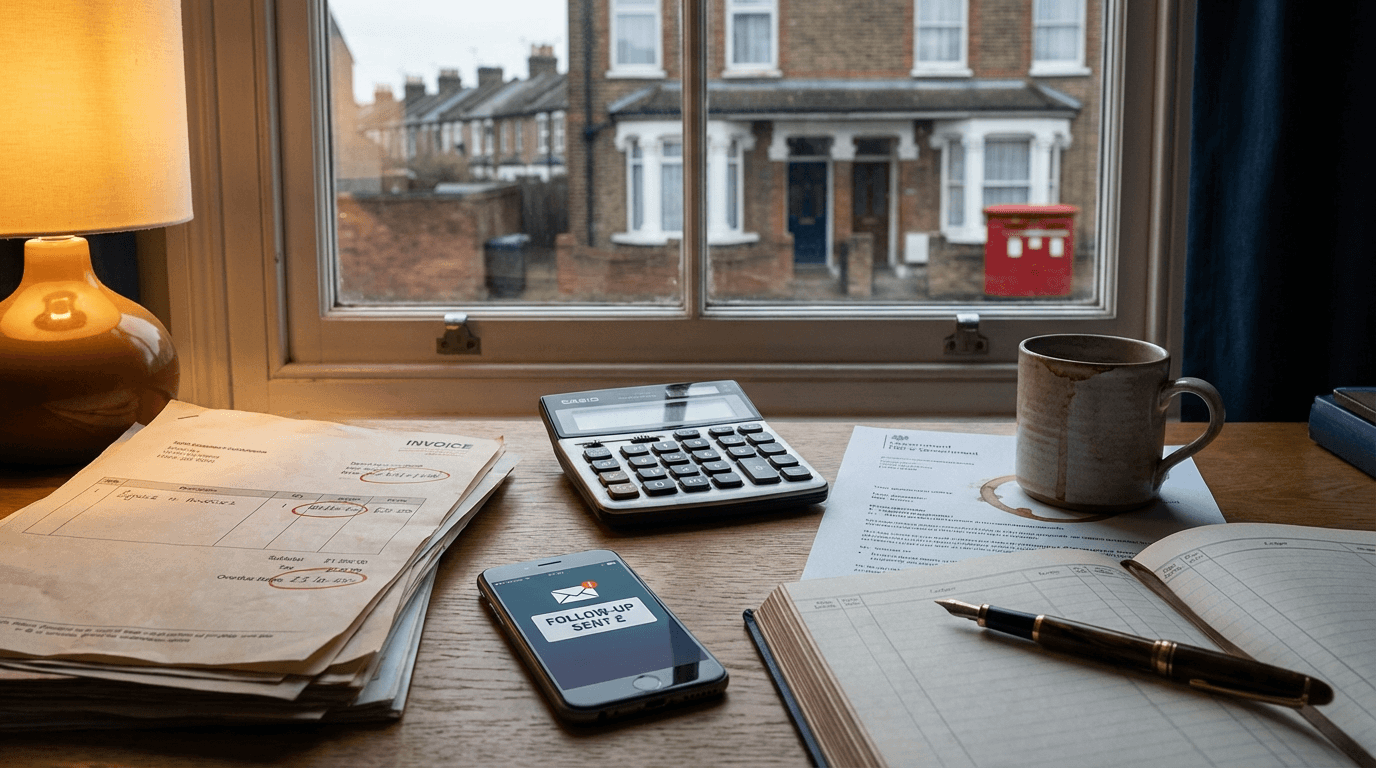
The Federation of Small Businesses (FSB) published its 2025 Late Payments Report this week, revealing that 50% of UK small business owners now accept overdue invoices as an inevitable cost of doing business. For UK SMEs, the data highlights a shift in how early adopters are using AI agents to automate credit control and chase cash without ruining client relationships. The report estimates firms lose up to £5,200 annually just in the time spent chasing debts.
FSB reports £5,200 annual cost for chasing debts
The FSB's latest trend report, commissioned alongside GoCardless, quantifies the exact drain late payments place on small businesses. According to the survey of over 2,000 business owners, 63% of firms spend significant staff hours chasing overdue invoices. This administrative burden costs them up to £5,200 a year in lost productivity, feeding into a wider crisis that the Office of the Small Business Commissioner estimates costs the UK economy £11 billion annually.
The situation has deteriorated to the point where 52% of respondents admit to completely writing off late payments up to 10 times a year simply to avoid the friction of pursuing them. However, the data also points to a mechanical shift in how businesses respond. Over a quarter of firms (27%) stated they plan to automate their payment and collection processes this year. We are seeing this play out in real time as finance teams deploy AI agents to handle the initial, polite follow-ups that human staff often delay out of awkwardness or lack of time.
The quiet risk for 50-person teams
The immediate takeaway for a £5M or £10M business is that your competitors aren't relying on a finance manager manually emailing clients on a Friday afternoon anymore. When half the market accepts late payments as inevitable, the firms that automate their credit control gain an immediate cash flow advantage.
The mechanism here is emotional distance. Human staff hate chasing money. It creates friction with clients they otherwise want to keep happy. AI agents don't feel awkward. They send the three-day reminder, the seven-day follow-up, and the 14-day warning with absolute consistency, using a polite, professional tone that preserves the commercial relationship. I think the fear of robots alienating customers is entirely overblown in this specific context. A well-configured AI agent acting as an accounts receivable assistant is often more polite and reliable than a stressed human.
For a 50-person team, the risk of doing nothing is that you become the easiest supplier to ignore. If your client is deciding which invoice to pay first, they'll pay the vendor whose automated system is consistently asking for it, while your manual invoice sits at the bottom of the pile.
Three things to check
- Audit your current chasing sequence. Look at your accounting software, whether that's Xero, QuickBooks, or Sage. Check if the native automated reminders are actually switched on, and review the copy to ensure it sounds like your brand.
- Test a dedicated credit control tool. If native reminders are too basic, look at dedicated tools like Chaser or Satago that integrate with your ledger. Many of these platforms now include AI features that predict which invoices are likely to be paid late and
Get our UK AI insights.
Practical reads on AI for UK businesses — teardowns, how-to guides, regulatory news. Unsubscribe anytime.
Unsubscribe anytime.